Saturday, 23 April 2011

Relaxing in Rio

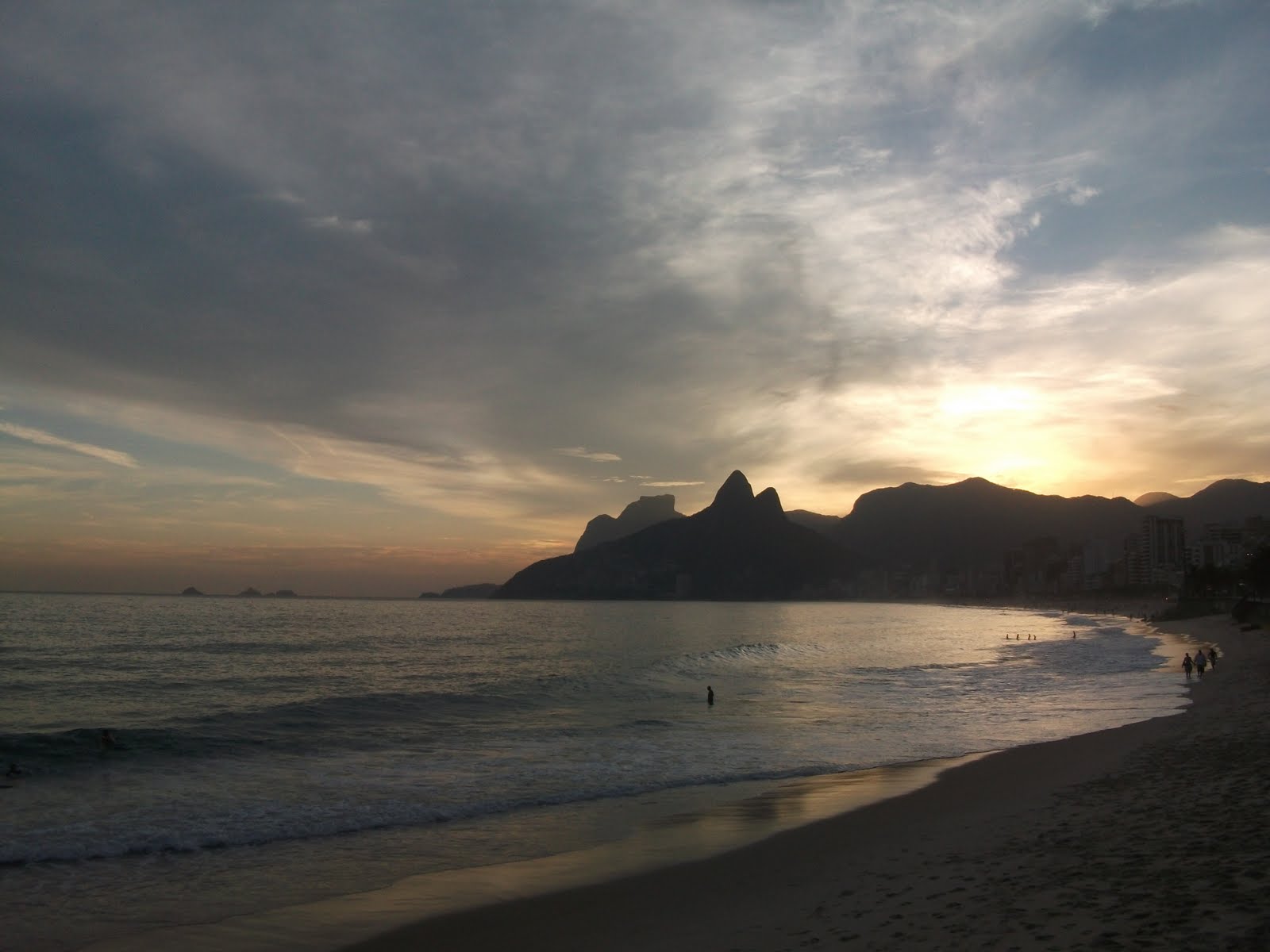
For the final part of my holiday, I took a short flight from Iguacu over to Rio de Janeiro for a few days relaxing in the sun. After all my traveling I was quite tired and so I decided to take it fairly easy here and not try to do too much. The first day I arrived, I settled into my hotel in Copacabana and in the late afternoon I headed out for a stroll along the beach. I walked along the famous Copacabana beach all the way to Ipanema, where many of the wealthier Cariocas (locals) now live. I arrived here just in time to watch the sun set over the beach, which was very beautiful. My initial concerns about safety in Rio were quickly overcome by how beautiful the beaches were and how lovely the sunset was. That evening I went out for dinner in Ipanema and then headed back to my hotel for an early night.

Although I mostly wanted to try and relax here, I had two main things on my agenda which I felt I absolutely couldn't miss - Cristo Redentor (Christ the Redeemer) the famous statue of Jesus which overlooks the city, and Pão de Açúcar (Sugar Loaf Mountain). However, my guide book recommended visiting both of these attractions on clear days, as the views from these mountains are very beautiful. Unluckily for me, the forecast was fairly bad for both days - hazy with a good chance of rain. When I woke up on Thursday morning, this forecast was confirmed and it was quite foggy. But I decided to bite the bullet and try to visit Cristo Redentor anyway, at least there was something to see there other than the view! I took the bus up to the base of the mountain where you can catch a cog train up to the top. However, when I arrived I quickly found out that there were more extensive tours by car, which stopped at several locations on the way and included an English speaking guide, for only R$1 more (about 35p).

So I joined a group of Dutch girls and together we headed up the mountain. We stopped about half way up to admire the (slightly misty) views, and bumped into some quite friendly monkeys, which were very cute! When we arrived at the top of Corcovado mountain, the statue was really very impressive. It can be seen from most of the city, and the mind boggles at how it was possible to get this 600 tonne statue to the top of the mountain! The views of the city from here where quite good, but I could only imagine how much better they might have been on a clear day.

After visiting Christ, we headed back down the mountain to visit a lake nearby, where we sat and enjoyed the sunshine and the views for a few hours with some delicious fresh fruit juice, before heading home.

If this post seems a little less superlative than some of my previous ones, I have to admit it's because Rio didn't grab me in the same way that some of the other places I have been did, or in the way people had told me it would. Perhaps it is because I have been so spoiled by beautiful scenery and surroundings everywhere else, but Rio was just not as magical as I had expected. Perhaps it was also partly due to how tired I was at this point - I had pretty much run out of energy to be thrilled by a place anymore.

The following day the weather was slightly better although still quite foggy, but I decided, as it was my last day and so my last chance to visit Sugar Loaf mountain, to go anyway. After a short (but crowded) bus journey, I arrived at the base of the mountain. Here I had to take two cable cars up to the top of Sugar Loaf mountain, with a pause in the middle to take in the views. The cable cars were pretty packed with people but it was still lovely to see the views on the way up. At the top, I spent an hour or so enjoying the scenery and watching the vultures circling in the thermals next to the mountain. It was lovely, and in most directions the views were actually quite clear. 

After lunch (a home made proscuitto and cheese sandwich because money is getting seriously tight!) I took the subway over to Lapa where I went to see, what can only be described as the single most hideous cathedral I have ever seen, and then took the Bondes, an old tram, up to Santa Teresa, one of the oldest parts of Rio. I had been warned it was quite dangerous in this area, because the hillside surrounding Santa Teresa is home to one of Rios several favelas (slums). However, I wanted to go anyway to see the old Portuguese architecture, and try out the ancient tram. For just R$0.60, I took the 15 minute ride up the hill past beautiful old Portuguese buildings. I spent about half an hour wandering the main (safer) streets of Santa Teresa, and doing a little gift shopping, before heading down. The ride back down was not as pleasant as the one up because the Bonde was so full of people. Some people simply clung on at the side without getting a seat, and had to press themselves against the tram at certain points to avoid hitting the walls and barbed wire fences we passed. Health and safety would have a field day with something like this in the UK!!

That night I made it back to my hotel early to pack (for the final time) before my flight up to Aracaju the following morning.

Saturday, 16 April 2011

Off to work we go...

Today I fly up to my field site in Sergipe, on the north east coast of Brazil. Here I'll spend 3 months catching, tagging and watching giant ants...

.
..and sitting on the beach, sipping cocktails :)

Wednesday, 13 April 2011

Iguazu: Waterfalls and Wildlife

After a lovely few days amidst the dramatic scenery of Calafate, I headed north east to the border between Argentina, Brazil and Paraguay, where the stunning Iguazu falls can be found. I arrived early evening at the Hotel Los Troncos, in the small town of Puerto Iguazu, and was immediately met with a warm welcome. The hotel was beautiful; fairly basic but charming and made almost entirely out of wood. I had my welcome drink - my first caipirinha of the trip.


The following morning I got up as early as I could drag myself out of bed, and took the 30 minute bus ride to the National Park where the waterfalls can be found. I began exploring the 15 km of trails in the Iguazu national park with the lower trail, which brings you down the hill side to view the Adam, Eve and Bossetti waterfalls from below. The views of the falls were absolutely stunning, surrounding the Rio Iguazu there are waterfalls cascading down almost every cliff, with thick forest peeping out in between.

At the bottom of the lower trail I took the opportunity for two boat rides. The first, known quite aptly as the 'shower' takes you up close to the waterfalls, and includes a seriously intense dip into the waterfalls themselves, in which it is impossible not to get absolutely drenched. Mostly this was incredibly fun and exhilarating, although for the most intense dunking I found it quite difficult to breath! After my shower, it took me nearly 3 hours to dry out completely, although my wet clothes provided some welcome relief from the heat.

The second boat trip was much shorter and less intense, and took me across the river to the San Martin Island which sits in between the falls. Here I took a short hike up the island to view the falls from another angle. Hundreds of vultures circle the island constantly, and I was lucky enough to see one perched on a tree quite close to the trail. The paths nearest the falls are constantly showered with a light mist of water from the neighbouring waterfalls, and the paths were quite slippy. At one point I lost my balance and spent a few seconds fumbling to regain my balance. Luckily I managed to stay upright! 

Heading back up the trail I stopped at the cafe for some lunch, where the tourists are constantly badgered by a small relative of the racoon, known in Argentina as the Couti. They were adorably inquisitive and friendly, coming right up to you and even climbing onto the tables to try and steal some food. The adults are about the size of a medium-sized dog, accompanied by lots of babies. Many of the other tourists seemed to find them a nuisance but I thought they were very cute.

In the afternoon I continued up to the upper trail, where you can see the falls from above. This tested my vertigo a little in places, but the views were spectacular. Finally, I caught the train up to the main attraction - the Garganta del Diablo, or devils throat. Here 1500m3 of water per second flows over a horse-shoe shaped cliff and plummets 150m to the river below. The water is so powerful here that it is impossible to see the base of the falls because they are obscured by a contant mist. This trail is quoted as taking 2 hours, however the walk itself takes just 10 minutes; you need at least an hour to come to terms with what you're seeing.


My day ended with a quiet dingy ride back down the river to view wildlife and appreciate the river at a slower pace. This was lovely, and during the ride we saw Caimen, Turtles and a Toucan.

The Iguazu national park was opened in 1934, and covers 67,000 hectares of sub-tropical forest, housing a miriad of different wildlife, including Puma, Armadillos, Birds of Prey and many more. The national park on the Brazilian side adds an extra 185,000 hectares of forest under protection. This might sound impressive, but it covers just 7% of the original size of these forests, and conservationists are still working to determine how severe an effect this level of deforestation has had.

On my second day in Iguassu, I headed over to the Brazilian side. They say that while Argentina got the waterfalls (80% of the Iguazu falls are on this side of the border), Brazil got the view. Only on this side of the border can you really appreciate the scale of the falls.

The short trail culminates in a view of the devils throat from a greater distance, and a close up view of the Brazilian 20%.

Viewing the falls, from both sides, is mesmerising. In contrast to the beautiful, but static scenery I have seen so far on my trip, the waterfalls are in constant motion, and it is easy to become entranced watching the motion of the water.

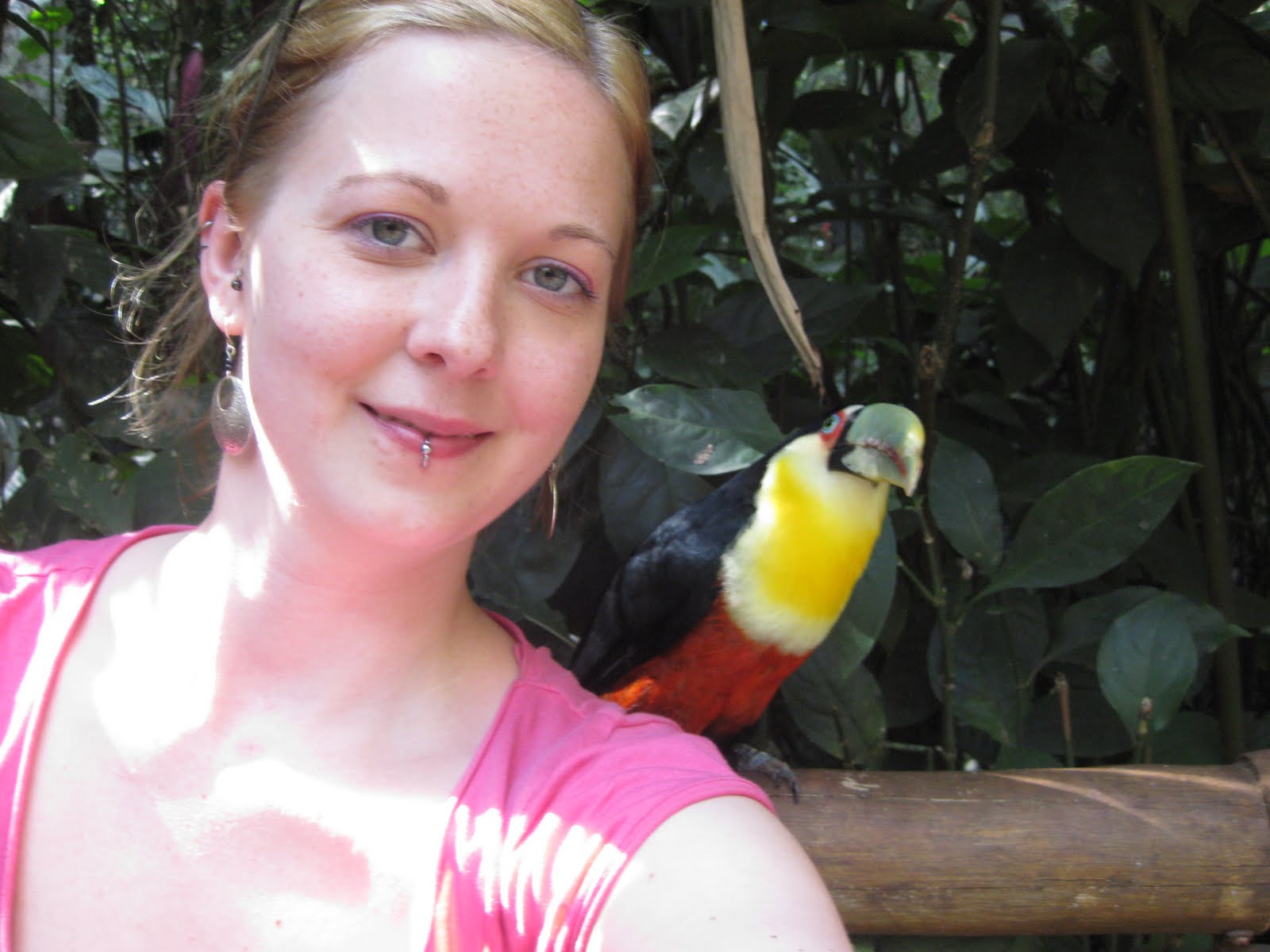
The Brazilian side of the waterfalls has a much less extensive set of trails, and takes only a few hours to view in its entirety. So that afternoon I was transferred to my hotel and had the afternoon free. I decided to visit the Bird Park, which was conveniently only a few minutes walk from the hotel. Here they have 5 acres of land housing numerous aviaries set amongst the forest, some of which you can walk in. The best of these was the first walk-in aviary, where they had about 30 Toucans, who are comically friendly and curious, and hop about on the trees and railings close to the path, begging to have their photo taken. I made friends with one in particular, who posed for a photo, let me stroke him, and only after about 10 minutes together did he tire of my presence and start trying to eat my top. 

Up next: Rio

On the final leg of my Argentinian adventure, I'm heading over to.... Brazil! I'll be spending my last few days of holiday in Rio de Janeiro.

Monday, 11 April 2011

Patagonia Part Two: El Calafate

After an exhausting day of travel, I arrived in Calafate - the most southerly point on my Argentina adventure. On the airport transfer I met two dutch girls, Suzanne and Marloes, who were staying at the same hotel as me, and when we arrived we immediately made plans to go for dinner together. It was so nice to have other people to have dinner and conversation with!

We had dinner at a small pizzeria in town, where I ordered a ham and pineapple (probably the best I have ever tasted!) and the dutch girls opted for a spinach pizza humerously entitled "Green, I love you green". After dinner we headed straight back to the hotel - we had a very early start the next morning for our glacier tour.

At 8am we were picked up from our hotel to make the 45 minute journey to the port on lake argentina where we would begin our boat tour. When we arrived at the port, we were presented with a rather upsetting reality - it was very windy, and the boat captain was not sure if it was safe to go out to the glacier today. We spent 10 minutes anxiously awaiting a final decision, fearing the worst. However, when the guide returned, he said we were able to go out in the boat afterall, and so we bought our tickets and boarded.

The boat tour began with an extremely rough 20 minutes crossing the widest part of the lake, but once we we reached the smaller channels, it calmed down considerably, and we were able to go out onto the deck and take photos of the scenery, which was absolutely stunning. Large, snow-capped mountains surrounded the lake on almost every side, and as we progressed, icebergs began to appear in the water. It was very beautiful, but it was still extremely windy and cold and being out on deck was a fairly intense experience.

After about an hour, we arrived at the first view of a glacier. This was the Upsala glacier, the second largest in the area. The huge wall of ice was incredible. It ranged from pure white in colour to a deep turquoise blue - this difference in colour reflects the age of the ice - older parts of the glacier are a deeper blue colour. Continuing on we passed more mountains, with a strange contrast between ice, mountain and thick forest. The colours were amazing. One part of the glacier we visited was particularly special. Here only a small edge of the glacier was visible, surrounded on both sides by mountains, with forest at the lower altitudes and snow at the peak. As it is autumn currently, many of the trees are beginning to turn a deep auburn red. A light rain was falling, and this formed the most spectacular rainbow over the glacier. We stopped here for about half an hour, before continuing on to the main attraction - the Perito Moreno glacier.

At the glaciers edge, a 60m wall of ice emerges between the mountains. The top of the glacier was jagged, whilst the walls were much smoother. Occasionally, large chunks of ice would fall from the edge of the glacier and come crashing into the water below. Perito Morena is the 3rd largest of the glaciers in the area, but it is one of the only remaining glaciers that in Argentina that is growing rather than retracting, at a rate of about 7cm a day during the winter months. It is also the only glacier here that is accessible by land.

After about 10 minutes of viewing the glacier, I started to feel rather unwell. I was developing what I now know as my glacier headache! The glacier is so white, it is almost painful to look at without sunglasses, and this combined with the rocking of the boat and the extreme exposure to the elements, started to make me feel quite ill. So I went back inside the boat, and tried to feel better. I spent most of the return journey sleeping, and when we arrived back at the hotel, I felt much better.

My second day in Calafate began with a 2 hour drive back into the national park and to Perito Moreno, this time to view the glacier from land. Along the way we stopped to see flamingos and some condors feeding! Once we arrived at the glacier, I had 3 hours to explore the trails, which offered various views of the glacier, some very close. This time, the ice falling from the glaciers edge was even more dramatic, although unfortunately just as we were leaving we heard a several huge crashes which probably would have been incredible to see up close.

That evening, my last in Calafate, I decided to go out for a meal and some drinks with my new friends, Suzanne and Marloes. We had a nice, if very expensive dinner at a crowded restaurant on the edge of town, and then headed back into the center (if you can call it that!!) to see if we could find anywhere good to go out for a few drinks. We stopped at one bar and had a beer, but it wasn't very busy and so we decided to move on elsewhere. By this point, I had reached the conclusion that Calafate was an extremely safe town, and after a couple of drinks and in good company, I started to let my guard down. Out of the blue, a man, who I hadn't even given a second glance to as he walked past us, tried to grab my bag. I'm not entirely sure how, but in the moment, I clung onto my bag, and he pulled me over onto the floor as he tried to run off. Luckily, he gave up and ran away, leaving me bruised and shaken, but with all my personal belongings. Apparently, this was only the second time anyone had been robbed in over 2 years - I must have been very unlucky!

Having calmed down a bit, we went onto another bar as planned - supposedly the most 'happening' place in Calafate. The Argentinians are notorios night-owls, so we had been warned that things wouldn't really heat up until about 2am. So we had a drink and waited. Slowly the bar started to fill up, but with almost exclusively middle-aged men who looked like farmers. At about 2.30am, we gave up and were going to head home when we spotted another bar, and this one was much better. We stayed out drinking and dancing till nearly 6am! Luckily we had been told that there was no check-out time the following day, and my flight wasn't until 3pm, so I had plenty of time to catch up some sleep before heading over to the next stop on my tour - Iguazu.

Sunday, 10 April 2011

Into the Jungle

Today I fly back up into more tropical clines, visiting the waterfalls at Iguazu (or Iguassu or Iguaçu, depending on who you ask).


My flight is slightly later than originally planned, since apparently the airline, aerolineas argentina, like to change their minds.... a lot!

Friday, 8 April 2011

Patagonia Part One: Puerto Madryn

Having settled into my hotel and had a much needed shower, I headed out to explore the town. My first afternoon in Puerto Madryn was free so I headed along the beach up towards the nearest peninsula, where I had been informed there were beautiful views, and a much anticipated nature museum, the Ecocenter. The views, were as promised, and the weather was lovely, so I really enjoyed my stroll up to the top of the peninsula. However, upon arriving at the Ecocenter I found that it was only open Thursday to Sunday, and then only from 3pm to 7pm. With opening times like that, it seems hardly worth bothering. Sadly for me, it was Monday, and I was leaving early on Thursday morning. So, I sat and enjoyed the views for a while, and, wandering around the perimeter of the museum I found I was still able to catch a glimpse of the skeleton of the famous Orca - Mel who used to rescue lost sea lion pups (usually a tasty snack for an Orca).

Heading back down towards town I stopped in at a museum that was actually open, detailing the colonisation of Puerto Madryn by the welsh in the 19th century. Did anyone else know that the Welsh colonised Patagonia? Because I certainly didn't. Apparently the were trying to escape persecution by the English. Its just a pitty that the European settlers didn't bring sheep to the area until much later, or they would have felt even more at home! The museum was quite good though, and just down the shore I was able to visit some man-made caves where the first settlers made their homes.

As an aside, one of the main problems that early settlers of the Chubut region had was a lack of fresh water. There is only one rather small river that serves the entire region, and even today water is a limited resource. Although this doesn't seem to stop the current residents from almost drowning their lush green grass and elaborate flower beds in water in order to maintain them!

Just after sun set I headed out into town to try and find some dinner. After getting a quick drink at a highly recomended bar called Margarita, where I enjoyed a cold beer and watched the owner change a lightbulb, I headed to a restaurant recommended in my guide book as serving the best pizza in town. This restaurant did not disappoint, and for the extremely reasonable price of 50 pesos, I had a really wonderful dinner. Early to bed that night though, as I knew I had an early start the following morning for my tour of Peninsula Valdes, starting at 8am.

An hours drive, and a chance to wake up properly, into my tour, we arrived at our first stop, the visitors center for Peninsula Valdes, where they have a skeleton of a baby (but still absolutely enourmous) Southern Right Whale, the whales which the area is known for. Unfortunately for me, it was out of whale season, so this was the only specimen I was likely to see. But, beggers can't be choosers, and it turns out this was exactly the right time of year to see baby sea lions. So we headed on, past Caleta Valdes, a bizarre mound of sediment deposited just off shore when the seas retreated some 90,000 years ago. Another 40 minutes later and we arrived at Punta Norte, where the sea lion colony was to be found. We had been informed that, if we were very lucky, we might get to see an Orca (or killer whale, although actually a dolphin, not a whale), as at this time of year they sometimes beach themselves rather dramatically in an attempt to catch a baby sea lion.


Seeing the sea lions was wonderful. As I said, at this time of year the mothers have young babies, who have just begun to enter the water alone, and watching them play in the waves was magical. They are quite a noisy bunch though! Waiting in tense anticipation, we watched to see if an Orca would appear. I wasn't quite sure if I should be willing one to appear, or not, as of course it would be an incredible thing to see, but equally the idea of seeing a sea lion pup being eaten was not something I relished. Either way, the orcas never turned up, and after about an hour, we headed home. 

My last day in Puerto Madryn was the trip I had been looking forward to most - a visit to Punto Tumbo and the largest penguin colony in Patagonia. After about 2 hours driving, the last half an hour of which was on a gravel track, we arrived at Punto Tumbo, a nature reserve south of Puerto Madryn. Here we bought our tickets and were given an hour and a half to wander through the reserve on specially laid out wooden paths. Immediately upon entering the park, we saw our first penguin. Right there next to the path, just minding its own business! It was amazingly close, and seemed totally calm about our presence. As I continued along the path up a small hill, there was another penguin. And then another, and another, and before I knew it, they were everywhere! Under almost every bush we passed there was a penguin or two, sitting or laying in the shade. At this time of year, the chicks have grown up and only juveniles and females remain, spending most of their time on land whilst they molt their feathers ready to head back to sea. Some of the penguins were looking a bit dishevelled, with half of their feathers missing, and the ground was absolutely covered in lost feathers. 

My initial excitement about the few penguins near the entrance was premature. Within the main part of the park, there were penguins everywhere. Apparently in total this colony contains about half a million birds, and it is hard to describe just what 500,000 penguins looks like, but it was absolutely incredible. Dotted about the landscape like pieces of black and white litter, literally everywhere you looked there was a penguin... or six. It was amazing. Best of all was how calm they were about humans. When you got too close, some penguins would look a little upset, tilting their heads from side to side in an attempt to judge how close you actually were, but we were still able to get within less than a meter of most of them, and it was amazing.

Last Day in Buenos Aires

On my last morning in Buenos Aires, the rains came. And in the tropics, when it rains, it pours. Despite this, I had a few last things I wanted to do before my bus left for Puerto Madryn that afternoon, so I caught the subway into town. First on my list was a short subway ride on a different line, where the original wooden cars where still in use. Sliding open the wooden doors by hand and sitting down on the benches inside was a little unnerving, but an experience I didn't want to miss. I couldn't help but imagine what it must have been like to ride the subway when it was first built, on these rickety wooden cars.


Leaving the subway at the next stop, Plaza de Mayo in the center of town, I headed towns San Telmo, where my guide had informed me there was an antiques market which was only open on Sundays. Despite the rain, the streets were lined with market stalls selling local crafts and souvenirs, for several blocks until I reached San Telmo. I'm not particularly bothered about antiques, and I certainly wasn't in the position to be buying anything much, but the market was definitely worth a visit. The market was already teeming with people at 11am, as well as street performers ranging from traditional tango dancers to digeridoo players. Unfortunately, I didn't have much time here, and after a fairly brief stroll around the market stalls, I had to head back.


Arriving back at the hotel at 2pm, I picked up my (excessive) luggage and took a taxi to the bus station, where I boarded my bus to Patagonia. I was pleased to find the bus was as luxurious as promised - large, comfy seats which reclined and air conditioning would definitely make the 17 hour journey more bearable. Food was served on board and we stopped several times along the way so I was able to smoke. In relative comfort, I managed to sleep for most of the journey, and awoke around 7am the following morning in time to have breakfast before arriving in Puerto Madryn, in the Chubut region of Patagonia.

Wednesday, 6 April 2011

On to Calafate

Today I'm flying over to El Calafate, where the one of the last remaining expanding glaciers is found. I'll be spending 3 days seeing the glaciers by boat and on foot. 


Unfortunately, there are no direct buses or flights from Puerto Madryn to El Calafate. I have to fly back up to Buenos Aires and then down to Calafate. I hope the bus I took to Puerto Madryn will at least partly make up for my carbon foot print!

Sunday, 3 April 2011

Heading down to Patagonia

After 3 days in Buenos Aires, today I'm taking an overnight bus to Puerto Madryn, in Patagonia, where I will spend another 3 days seeing local wildlife, such as whales and penguins. Wish me luck on the 17 hour bus ride!!

Hola Buenos Aires!

My adventure began with one of the most hectic days of my life. Having returned to Leeds with just 4 days to prepare and pack for my trip, everything was considerably more last minute than I would have liked. The day of my flight began with some last minute packing, followed by a trip to Halfords on a wild-goose chase for some crocodile clips for my fieldwork. In the end, packing came down to the wire, and I just about managed to get everything together in time to catch my train to the station at 2pm. 

My journey to the airport allowed me to discover what is my upper limit of luggage. Unfortunately, it was slightly less than the amount of luggage I had. With a full size backpack, suitcase, padded case full of radio tracking equipment and hand luggage, I only just made it to the check in desk. Thankfully my bags were now checked in all the way to Buenos Aires.

Having boarded the plane, I quickly discovered that I had hit the economy class jackpot. Three seats in a row with nobody sitting in them! I almost felt sorry for the saps in first class who had actually paid extra to lie down flat for 13 hrs - I was able to do it at no extra cost! 

I arrived in Buenos Aires the following morning, exhausted. I checked into the hotel and decided to have a nap in preparation for the city tour in the afternoon. At 2.30pm, Analm, my English speaking tour guide, arrived to pick me up. For the next two hours we drove around the streets of Buenos Aires as she pointed out sites of interest, stopping a couple of times to take a closer look. We made a brief stop at Recoleta Cemetery, final resting place of Evita, and another at Caminito, the vibrantly coloured shanty town, once home to thousands of European immigrants. When the immigrants first arrived in Buenos Aires, they were given housing by the government for just 4 days before being expected to make their own way in the city. Understandably, this was a formidable task, and most of them ended up living communally in small shacks built from whatever materials were available, and painted using paint stolen from cargo ships. Caminito also lays claim to being the home of the Tango, and its vibrant atmosphere is quite contagious. 

The next day, I headed straight back to Recoleta cemetery, the "city of the dead", for a closer look. The cemetery is aptly named, as it the hundreds of mausoleums form disorganised streets and alleyways. A mish-mash of architectural styles, the cemetery really does have to be seen to be believed. The main tourist attraction is, of course, the burial place of the much beloved Evita, although the Government were initially unhappy about her burial here, and the mausoleum is hidden away on of the the "side-streets" making it quite difficult to find. Although it might sound strange, the cemetery is quite a pleasant place to be. Many of the "streets" are lined with trees providing much needed shade from the relentless sun.

For the remainder of the day, I decided to head to the numerous parks and gardens in the Northwest of the city. I began by heading to the Japanese Gardens, which are utterly picturesque, and as the day drew to a close, I wandered over to the BA botanical gardens. Unfortunately, this part of town is not well served by the underground network, and so I traveled everywhere on foot, and by the time I arrived at the botanical gardens, my feet were threatening to kill me! Upon arriving at the botanical gardens, I was a little disappointed at what initially appeared to be, well, just a load of trees. So I found a nice looking bench and had a little nap. Feeling refreshed and rejuvenated after my sleep, I finished wandering around the gardens and they turned out to be a lot more beautiful than I had at first given them credit for. What a difference a nap can make!

On my last full day in the nations capital, I decided to head back towards the center of town to visit the historic parts of the city. I began in the Plaza de Mayo, the historical hub of the city, where the president's home resides, and the site of frequent political protests and demonstrations. The government office offers guided tours (although, not in English!) around the building, and so I jumped at the chance. We were allowed to tour the building quite extensively, including a brief visit to the office of the president and of his secretaries.

I got lucky and managed to tail an English speaking tour guide so that I was actually able to understand what I was looking at!


I ended my day with one final trip to the richest part of town, Puerto Madero. This area, next to the disused docks, has benefited greatly from a recent cash injection, and is now home to swanky restaurants, high-rise apartments and hotels, and boasts being the safest part of the city due to the many guards and security cameras. Immediately next to this is the Reserva Ecologica, an area of grass land which appeared, somewhat accidentally when the city tried to reclaim the land from the river, and then gave up half way through. It is now home to a variety of wildlife, and a beautifully relaxing way to escape from the bustle of the city. As the evening drew in, I headed back over to the main street of Puerto Madero, where I intended to find somewhere to have a nice meal by the harbour. Unfortunately, the restaurant I chose, although one of the more reasonably priced in this area, turned out to be pretty awful. The food was, OK, although a little salty, but most frustratingly,
despite being only the second customer in that evening, the food took absolutely forever to arrive. When it did, my pasta was so cheesy that by the time I left, I was feeling quite ill. Walking back towards the subway station, I tried to get some cash out and failed, repeatedly. I was beginning to hate BA. When I finally got onto my subway ride home, I was feeling tired, fed up, and a little sick still. Then, a man got onto the train and started busking with his acoustic guitar, tambourine and harmonica. Apparently, this was exactly what I needed, and it completely turned my mood around. By the time I got off the subway, Buenos Aires was back in my good books. 

Tomorrow I take the executive night bus to Puerto Madryn, in Patagonia! 

Thursday, 31 March 2011

Off to Argentina!

I'm flying out to Argentina tonight, to begin my 16-day holiday traveling around Argentina, Patagonia and finally southern Brazil. Below is a map of my journey. I'll be arriving in Buenos Aires at 7.30am (11.30GMT) tomorrow morning. Have a good night!

Tuesday, 8 February 2011

Another trip to South America...?

Hey, finally, an update! Which means I'm travelling again! I've just booked my second field trip to Brazil, complete with 2-week holiday in Argentina to start off. Watch this space - I'll be updating throughout my trip with pictures and stories.

Wednesday, 24 March 2010

Heading Home

Today I'm heading back to the UK. Below is a map of where I'll be travelling. I won't be getting back into the UK until tomorrow (25th).


Hopefully see you soon!
Claire xx

Thursday, 18 March 2010

Update Five: Praia de Saco

As I already mentioned, the second half of last week was characterised by an awful lot of worrying on my part about the potential BA strike and how I was going to get back to England. By the end of Friday we had decided that I would be getting my flight as originally planned, so by the weekend I was feeling a bit more relaxed. We had a BBQ on campus on Friday afternoon which also helped to cheer me up a little bit.

Saturday was a nice lazy day - I had a lie-in, and after lunch me and Polly went to the swimming pool which belongs to the apartment block where I'm staying. I managed to judge it just right and not get sun burnt, which was quite impressive considering my track-record so far.

Sunday was the day I had been looking forward too for almost the entire time I'd been in Aracaju - a boat trip to see the famous 'Praia de Saco' - which apparently translates literately to Beach of the Bag, weird. At 8am Sunday morning we got up and drove to Estancia, where we caught a the boat. The trip began by
taking us to a small stretch of sand forming a temporary island, only there when the tide was low. It was stunningly beautiful. I looked like one of those beaches you see in the holiday brochures - perfect white sand with palm trees dotted along it, deep turquoise water and blue skies. The beach curved round to form a sort-of crescent shape, and at the far end were two small huts with grass roofs.

 After an hour or so on the beach, we set sail again and headed for the main land, where we stopped at a small sea-side town where we were offered a buggy ride across the sand dunes for just 15 reale each. The buggy ride was fantastic - we sped across the dunes, dipping down steep slopes and turning sharp corners. We stopped a couple of times to take photos and, miraculously, I managed not to get sand in my camera!


We finished the buggy ride and got back onto the boat where we had lunch, and had a few hours to sun bathe or swim in the sea, while some of the people on board played Brazilian music on an acoustic guitar.  There was one older guy who had one too many caparinhas on the boat and spent the journey back to land wobbling about the boat and occasionally falling over.

After the boat tour, Mirella took us to her god-father's house in a very exclusive set of houses called Porto Bello, and we sat at the bar overlooking a river, having some dinner and a few beers and watching the sun set. Unfortunately the very drunk guy from the boat came with us, and was the source of much entertainment for the rest of the evening. The rest of the evening was largely a long Portuguese lesson, because one of the girls with us spoke English pretty fluently, and so provided a good opportunity to learn a few new words and phrases, although a worrying percentage of them were rude!

Since Sunday, life here in Brazil has been fairly uneventful. I've been spending my days watching my ants, and trying to collect as much observational data on them as possible before I head back to England. My evenings have been spent with my housemates watching Brazilian soap operas, which are actually slightly more entertaining than English soap operas, probably because I don't know what they're saying! Today was a holiday in Aracaju because it is the 155th anniversary of the city being founded. I thought that might mean we went out and did something interesting, but we've ended up spending all day at home watching films and generally being lazy, which is nice.

As I already mentioned, my trip here has been extended by a few days, so instead of coming back on Friday, I'll be leaving next Wednesday, so expect another update before I leave!

Claire xx

Tuesday, 16 March 2010

My Slightly Delayed Return

Last week we heard that BA crew were considering strike action around the time of my return. After a few days of nervously checking the BA website every 5 minutes, I found out that they would be striking on the 20th March - the day I was scheduled to be arriving into the UK and catching a connecting flight to Manchester. I considered whether to change my flights to avoid the possible chaos caused by the strike, but in the end decided not to.

Today I found out that there is a serious chance that the permit for bringing my ants back into the country might not arrive in time. It's been approved but has to be posted first to my supervisor Fabio in Sao Paulo, and then sent to me in Aracaju. So today, after much discussion we decided to extend my trip slightly - I will now be coming back on the 24th instead of the 19th.

I'll post a proper update of what I've been up to, apart from worrying about getting home, tomorrow, when I get a chance.

Claire xx

Wednesday, 10 March 2010

Update Four: Boats, Birthdays, Buses and Beaches


On Thursday morning, a biology student here called Tiago offered to take me out for a tour of Aracaju city, so we went out and drove around a bit, and he showed me parts of the city I hadn´t seen yet, which was quite a bit since all I had seen so far was the beach! We drove past the huge market in the city, which sells mostly food, in particular fruit and cheese, but also meat including live Chickens! We also saw the new bridge which joins the city to a neighbouring city across the Rio Sergipe.

After the tour of the city, we went and sat in a small bar / restuarant by the beach and had some lunch before heading back to the lab. The beach is pretty much what you imagine (or what I imagine!) when you say Brazillian beach, and from where we were, appeared to stretch on infinitely in both directions.

Friday was the first day I had found myself without a lift to university, and so was forced to brave the Brazilian buses alone. It didn't go well. To get from Lorena's house to the university I needed to take one bus to the nearest bus station (Terminal D.I.A) and then a second bus from there up to the campus. I made it to the D.I.A safely, but then, after several brief and confusing conversations with some locals, managed to get on the wrong bus. After about half an hour on the hot, cramped bus I decided that it definitely wasn't going the right way, and got off at the next bus station. I decided the best plan was to get a taxi from there to the university, which did work, but cost me £5. In the end it took me about 2 hours to get to campus, when it should have taken about 45 minutes. My second encounter with the buses was on Monday, and it was even less successful. I had found out by now that I needed to catch the no.60 bus from the D.I.A, so I thought I would be OK. I managed to get on the 60 without too much trouble, but halfway to campus it broke down, and everyone on the bus got off and immediately onto another bus which was just in front. This, however, was not the number 60, and about half an hour later I decided that it definitely wasn't going the right way, and got off at the next bus station. Failing to find any buses from there that went to campus, I decided to cut my losses and get a bus back to the D.I.A and start again. *Sigh*. About 2 and a half hours later, I finally arrived at the university, hot and very very disheartened.

On Friday, Lorena and Mirella took me to a neighbouring town called Estancia, where their family lived, and we attended the first birthday party of their dog, Vicky. We had cake and party snacks with Lorena's Mum, Uncle, Grandparents and brother, and they even made a tiny party hat for the dog. The next morning we went for a look around Estancia, and went to the market there where they had lots of very cheap cloths and shoes.

Saturday evening Polly invited me to a concert in Aracaju called "Forro de Antigas" which was an outdoor concert of traditional Brazillian music. It was very much like a festival in that the toilets were porta-loos, the ground was muddy and the drinks were expensive. Or, expensive for Brazil anyway. I met lots of Polly's friends there, and everyone was quite interested and confused by my presence there - I think I must have been the first tourist ever at Forro de Antigas, because some of the locals tried to touch my hair as I was going past, as if they had never seen anything like it before!

Polly tried to teach me the traditional Brazillian dance, Forro, and I gave it a go, not very well though. I got home as early as I could that night because I knew that I had to be up at 6am on Sunday morning to go on a boat tour to see the Canyon San Fransico. Unfortunately, early turned out to be 1.30am (Polly didn't get home till 4am!) and I got a lift back with Polly's sister, Luana.

On Sunday morning I dragged myself out of bed and hurridly got ready for my boat tour, which I was being collected for by the tour company at 7am from Lorena's house. I managed to be ready on time and, bleary-eyed, I got onto the minibus. I thought that it would be a short drive to the boat where we were going to travel up the Rio San Fransico to the canyon, but clearly I had misunderstood the half-Portuguese, half-English conversation I'd had with Mirella about it, because it turned out to be a 3 hour drive before we reached the canyon, where we then got on a boat. It was worth the long drive though as the canyon was stunning and we stopped off along the way at a small jetty from which we could get into a small canoe and be taken closer to the steep cliffs. It was a beautiful day and the waters were deep turquoise, contrasting against the deep red and orange cliff faces.

Tuesday, 2 March 2010

Update Three: My First Week in Sergipe

My trip to Aracaju was very stressful. After my trip to the Amazon I spent a night in a hotel in Manaus, before my flight at 6am the next morning. I set an alarm on the alarm clock in my room for 3am, but apparently, in my bleery-eyed state I managed to set it for 3pm instead, and so I woke up at 4.30am, with just an hour and a half to get ready and packed and get to the airport for my flight. Panic!! Somehow, despite a very long and slow-moving check-in cue at Aracaju airport, I made it to my flight on time. I then had to endure a 2 hour flight to Belem, where my plane made a 40minute stop-over before continuing to Fortaleza, where I changed to a flight to Aracaju, which also had a stop-over at Recife. What a day! At 3pm I finally arrived at Aracaju airport, Sergipe, where my new supervisor Fabio met me.

In Aracaju Fabio had arranged for me to stay with one of his students, Lorena, a lovely Brazillian girl who unfortunately speaks about as much English as I speak Portuguese, which isn't much! She lives with her sister Mirella and her friend Polly, who speak a little more English, but still very little. I could tell I was in for an interesting 3 weeks.

My first few days in the lab at Universidade Federal de Sergipe (UFS) were quite slow, just getting accustomed to the ants (which are absolutely huge!) and observing their behaviour. I met an American couple called Hans and Becky who have provided some much needed company and English conversation. On Friday night Polly took me out to meet some of her friends and go out for a few drinks, which was nice but I was far to tired to really enjoy it, and trying to understand portuguese is difficult even when there isn't a band playing in the background!


Saturday Polly and I went to the beach in Aracaju, which was lovely. The beach is quite popular with the locals and so quite busy. Although the water is very clean, it has a brown-ish tint to it caused by sediment from the nearby Rio Sergipe. In the evening I was invited by Lorena to the 1st birthday party of her cousin. The party was beyond belief. The main room was covered in balloons shaped into flowers, and huge fairy posters and statues, and the focal point was a giant, 3 tiered pink cake. Outside was what is most probably the entire selection of kids toys and games available in Brazil. It seems that Lorena's entire extended family attended the event, and her sister told me later that it had cost 10,000 Real (about £3000!).

On Sunday I had planned to go with Hans and Becky by bus to a beautiful beach, about 45 minutes away from Aracaju. Their friend had told them that the bus left the station at 11am every day. Apparently every day doesn't include Sunday, however, as when we arrived at the bus station we were told that the bus had left at 8am. The interesting thing about Brazil is, that nobody seems to know the entire story - the people at the bus station in Aracaju had no idea what time the bus would be returning from the beach, they only knew what time it left! Instead we went to the same beach I had been to on Saturday, where I proceeded to get very sunburnt, and as I would later find out, give myself mild heat stroke.

Monday I was supposed to go out with the lab technician, Dantes, to collect some Dinosaur ant colonies. But due to aforementioned sun stroke, I instead spent the day sleeping and trying to feel better. By Tuesday I had managed to recover and went out at 8am to collect more ant colonies. The dinosaur ant colonies can be found at the base of trees, entangled in their roots, in areas of relatively sparse tree cover. The result is that in order to collect a colony, you have to spend several hours with a spade and a pick-axe digging up the colony in the unrelenting Brazillian sun with almost nothing to provide any shade. Its almost as if they were trying to make it difficult. The ants don't send out any foragers during the day because of the heat, so externally the nest looks like a small heap of earth at the base of a tree. I have no idea how anybody can find and accurately identify these colonies, but apparently Dantes had the know-how, because we returned in the afternoon with another 2 colonies.

Aracaju is a very strange place. Major modern developments in the city
have been relatively recent, and so although there are skyscrapers, they are often surrounded by dirt roads, and it is one of the few places in Brazil where horse-and-carts are still used to any great extent. The people here are very friendly and energetic though and they are making me feel quite at home (or as much at home as is possible when you're 5000 miles from it!)